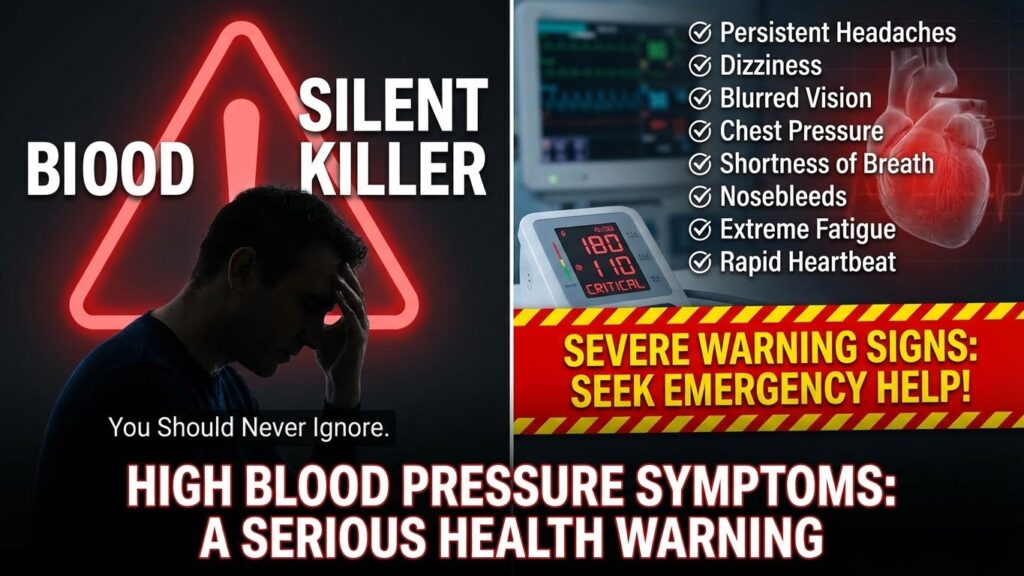
High Blood Pressure Symptoms You Should Never Ignore: A Serious Health Warning
High blood pressure — also known as hypertension — is one of the most dangerous health conditions today. It is often called a “silent killer” because many people don’t know they have it until it is already causing serious damage. Understanding the symptoms and acting early can save your life.
In this blog, we break down the signs you must watch for and why monitoring your blood pressure regularly is extremely important.
What Is High Blood Pressure?
Blood pressure measures the force of blood pushing against the artery walls. When this pressure stays high for a long time, your heart and blood vessels are put under dangerous stress.
Over time, untreated high blood pressure can lead to:
- Heart attack
- Stroke
- Kidney damage
- Vision loss
- Heart failure
That is why early detection is essential.
Why High Blood Pressure Is So Dangerous
One of the biggest risks is that high blood pressure usually has no symptoms at all. Many people can live for years with dangerously high levels without feeling any warning signs.
But when symptoms finally appear, it often means the blood pressure has reached a level that needs urgent attention.
Common Symptoms of High Blood Pressure
Although many people feel completely normal, the following symptoms may appear when blood pressure is elevated:
✔ Persistent Headaches
A throbbing or constant headache may be a sign your blood pressure is rising.
✔ Dizziness or Light-Headedness
Feeling unsteady or faint can happen when your circulation is under pressure.
✔ Blurred or Double Vision
High blood pressure can affect the blood vessels in the eyes, causing vision problems.
✔ Chest Pressure or Discomfort
Even mild chest tightness should not be ignored.
✔ Shortness of Breath
Difficulty breathing can happen if the heart is working too hard.
✔ Nosebleeds
Unexpected or frequent nosebleeds may be linked to sudden spikes in blood pressure.
✔ Extreme Tiredness or Fatigue
Feeling unusually weak or drained may signal your heart is struggling.
✔ Rapid Heartbeat or Anxiety Feeling
A racing pulse or intense feeling of anxiety can sometimes be related to high blood pressure.
If you regularly experience any of these symptoms, it is important to check your blood pressure and consult a medical professional.
Severe Warning Signs – Seek Emergency Help Immediately
If your blood pressure becomes dangerously high, the symptoms can escalate quickly. These signs require urgent medical attention:
⚠ Severe headache
⚠ Severe chest pain
⚠ Difficulty breathing
⚠ Sudden vision loss or severe blurred vision
⚠ Confusion or difficulty speaking
⚠ Fainting or collapse
These symptoms may indicate a hypertensive crisis, which can lead to a stroke or heart attack within minutes.