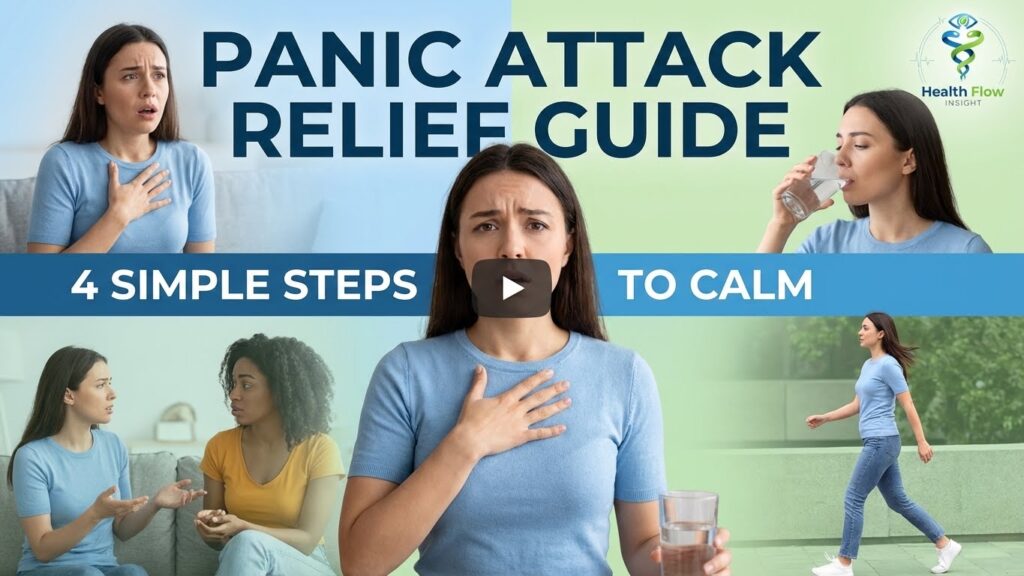
Understanding Panic Attacks: Simple Techniques That Can Help You Regain Control
Panic attacks can feel overwhelming—your chest tightens, your breathing becomes rapid, and a sense of fear takes over without warning. But even though these moments are intense, they are manageable. With the right techniques, many people are able to calm their bodies, refocus their minds, and get through the episode more comfortably.
In this guide, we walk through four simple, practical strategies demonstrated in our video that can help reduce the intensity of panic symptoms.
1. Recognizing the Symptoms: Heavy Breathing and Sudden Anxiety
A panic attack often begins with sudden physical sensations such as heavy breathing, chest pressure, trembling, or dizziness. These symptoms can be frightening, but understanding that they come from your body’s “fight or flight” response can make them less intimidating.
The key reminder:
Panic attacks are temporary, and the sensations will pass even if they feel intense in the moment.
2. Using Deep Breathing and Hydration to Calm the Body
One of the quickest ways to regain control is through slow, intentional breathing. Deep breathing signals the nervous system to begin calming down. Pairing this with small sips of water can further help regulate your body’s stress response.
Try this simple technique:
- Inhale slowly through your nose for 4 seconds
- Hold for 2 seconds
- Exhale gently for 6 seconds
Repeating this cycle can help stabilize your breathing and reduce the feeling of panic.
3. Talking to Someone You Trust
During a panic attack, your thoughts can spiral very quickly. Speaking to a friend, family member, or anyone nearby can act as a mental distraction and help bring you back to the present moment.
Even a brief conversation—about anything unrelated to the panic—can break the cycle of anxious thoughts. Human connection itself is grounding.
4. Going for a Short Walk to Release Physical Tension
Light movement, such as a brisk walk, can help your body release built-up stress hormones. Walking increases oxygen flow, relaxes tense muscles, and gives your mind something else to focus on besides the anxiety.
For many people, simply changing their environment—even for a few minutes—can significantly reduce symptoms.
You’re Not Alone
If you’ve experienced panic attacks, know that you are not alone and there are effective ways to cope. These moments can feel powerful, but they do not define you and they always pass.
Small steps like breathing exercises, grounding techniques, talking to someone, or moving your body can help you take back control—one moment at a time.